
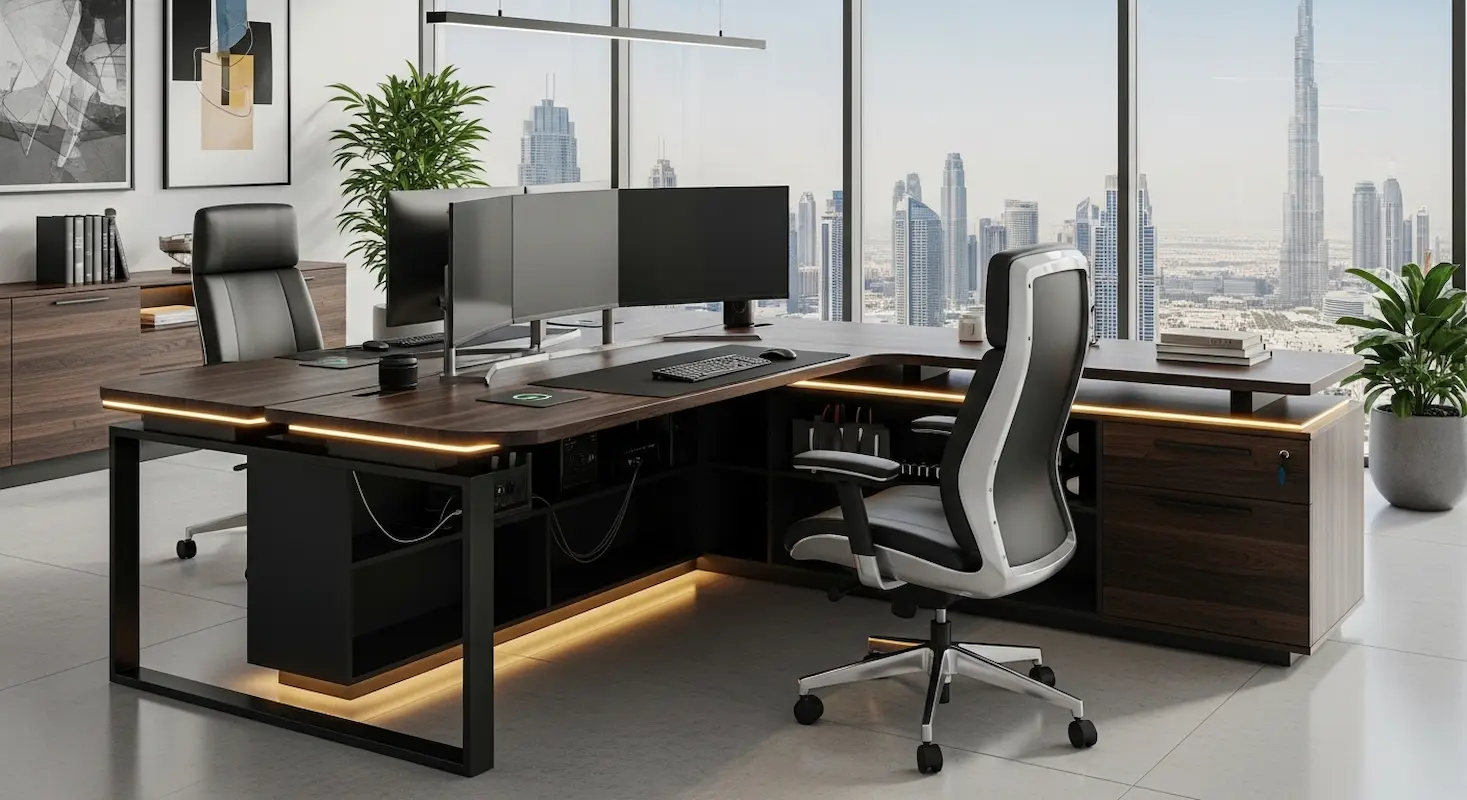
What Is the Difference Between Office Cubicles and Workstations?
Modern offices are designed to support productivity, collaboration, and employee comfort. When planning an office layout, two of the most common furniture solutions businesses consider are office cubicles and office workstations. While these terms are often used interchangeably, they serve different purposes and offer unique advantages depending on the workplace environment.
Understanding the difference between office cubicles and workstations can help businesses make the right investment for their employees, maximize office space, and create a more efficient work environment.
In this guide, we’ll explore the key differences, benefits, and ideal use cases of both options to help you choose the best office furniture solution for your workplace.
What Are Office Cubicles?
Office cubicles are semi-enclosed workspaces designed to provide employees with a dedicated area for focused work. They typically feature partition walls that separate individual work areas from one another.
Cubicles became popular because they offer a balance between privacy and efficient space utilization. Employees can work with fewer distractions while still remaining part of the larger office environment.
Key Features of Office Cubicles
- High or medium-height partition panels
- Individual workspaces
- Enhanced privacy
- Reduced workplace distractions
- Built-in storage options
- Better noise control
Advantages of Office Cubicles
Improved Privacy
Cubicles provide employees with a personal workspace where they can focus on tasks without constant interruptions.
Reduced Noise Levels
The partition walls help absorb sound, making the office quieter and more conducive to concentration.
Better Organization
Many cubicles include filing cabinets, shelves, and storage compartments that help employees stay organized.
Increased Productivity
For roles that require concentration, such as accounting, customer support, and administration, cubicles can significantly improve productivity.
What Are Office Workstations?
Office workstations are open-plan desk arrangements designed to accommodate multiple employees within a shared workspace. Unlike cubicles, workstations focus on collaboration and communication.
Modern workstation systems often include bench desks, cluster desks, and modular furniture that can be customized to fit different office layouts.
Key Features of Office Workstations
- Open office design
- Shared workspace arrangements
- Collaborative environment
- Modular configurations
- Efficient use of office space
- Flexible layouts
Advantages of Office Workstations
Enhanced Collaboration
Employees can communicate more easily, making workstations ideal for team-based environments.
Space Efficiency
Workstations accommodate more employees within a smaller footprint compared to traditional cubicles.
Cost-Effective Solution
Since workstations require fewer partitions and materials, they often have lower installation costs.
Flexibility
Modular workstation systems can be reconfigured as teams grow or organizational needs change.
Office Cubicles vs Workstations: Key Differences
Understanding the distinctions between these two office furniture solutions is essential when designing an efficient workspace.
| Feature | Office Cubicles | Office Workstations |
| Privacy | High | Low to Moderate |
| Collaboration | Limited | Excellent |
| Noise Control | Better | Less Effective |
| Space Utilization | Moderate | High |
| Flexibility | Moderate | High |
| Cost | Higher | Often More Affordable |
| Employee Interaction | Reduced | Increased |
| Best For | Individual Tasks | Team-Based Work |
Which Option Is Better for Employee Productivity?
The answer depends on the nature of the work being performed.
Choose Office Cubicles If:
- Employees require concentration and privacy.
- Sensitive information is frequently handled.
- Phone calls and virtual meetings are common.
- The workplace experiences frequent distractions.
Examples include:
- Accounting departments
- Human resources teams
- Legal offices
- Customer service operations
Choose Office Workstations If:
- Team collaboration is essential.
- Employees work on shared projects.
- Creativity and communication drive productivity.
- Space optimization is a priority.
Examples include:
- Marketing teams
- Sales departments
- Startups
- Creative agencies
- Technology companies
How Office Design Impacts Workplace Efficiency
Office furniture plays a major role in employee satisfaction and overall business performance.
Research consistently shows that workplace design influences:
- Employee engagement
- Productivity
- Communication
- Job satisfaction
- Retention rates
A poorly designed office can lead to distractions, stress, and reduced performance, while a well-planned workspace supports efficiency and collaboration.
Many modern businesses now combine cubicles and workstations to create a hybrid office environment that supports both focused work and teamwork.
Hybrid Office Layouts: The Best of Both Worlds
Many companies are moving away from choosing one solution exclusively. Instead, they create flexible office layouts that combine cubicles and workstations.
For example:
- Open workstations for collaborative teams
- Quiet cubicle zones for focused work
- Meeting rooms for group discussions
- Lounge areas for informal collaboration
This balanced approach helps organizations accommodate different work styles while maximizing office space.
Factors to Consider Before Choosing
Before investing in office furniture, evaluate the following:
Office Size
Smaller offices often benefit from workstation layouts due to their space-saving design.
Company Culture
Collaborative cultures typically perform better with workstation systems, while privacy-focused workplaces may benefit from cubicles.
Budget
Workstations often have lower upfront costs, but premium modular systems can vary significantly in price.
Employee Preferences
Gathering employee feedback can help determine whether workers prefer privacy or collaboration.
Future Growth
Modular workstation systems are generally easier to expand as the company grows.
Why Modern Businesses Prefer Modular Workstations
The rise of hybrid work environments has increased demand for modular office furniture. Workstations can be easily adjusted, expanded, and reconfigured to support changing business needs.
Benefits include:
- Scalability
- Easy maintenance
- Modern aesthetics
- Improved teamwork
- Better space management
However, businesses that prioritize confidentiality and focused work still find office cubicles highly valuable.
Frequently Asked Questions (FAQs)
1. What is the main difference between office cubicles and workstations?
The primary difference is privacy. Office cubicles use partition walls to create semi-private work areas, while workstations feature open layouts that encourage collaboration and communication among employees.
2. Are office cubicles better for productivity?
Office cubicles can improve productivity for employees who perform tasks requiring concentration, privacy, and minimal distractions. They are especially beneficial in administrative, financial, and legal environments.
3. Why are office workstations popular in modern offices?
Office workstations promote teamwork, improve communication, maximize office space, and offer flexible configurations, making them ideal for modern collaborative workplaces.
4. Which is more cost-effective: cubicles or workstations?
In many cases, workstations are more cost-effective because they require fewer partitions and materials. However, costs vary depending on design, size, and customization requirements.
5. Can an office use both cubicles and workstations?
Yes. Many businesses implement hybrid office layouts that combine cubicles for focused work and workstations for collaboration, creating a balanced and productive work environment.
Conclusion
When comparing office cubicles vs workstations, there is no one-size-fits-all solution. The best choice depends on your company’s goals, workspace requirements, employee preferences, and budget.
Office cubicles provide privacy, reduce distractions, and support focused work, making them ideal for roles that require concentration. Office workstations, on the other hand, encourage collaboration, maximize space efficiency, and offer greater flexibility for growing teams.
For many organizations, a hybrid office design that combines both solutions delivers the greatest benefits. By carefully evaluating your workspace needs, you can create an office environment that enhances productivity, supports employee well-being, and drives business success.
Whether you’re furnishing a startup, corporate office, or growing enterprise, selecting the right office furniture layout is a critical step toward building a more efficient and productive workplace.
Explore premium office cubicles, modular workstations, and modern office furniture solutions at OfficeInn UAE to create a workspace designed for performance and growth.


